
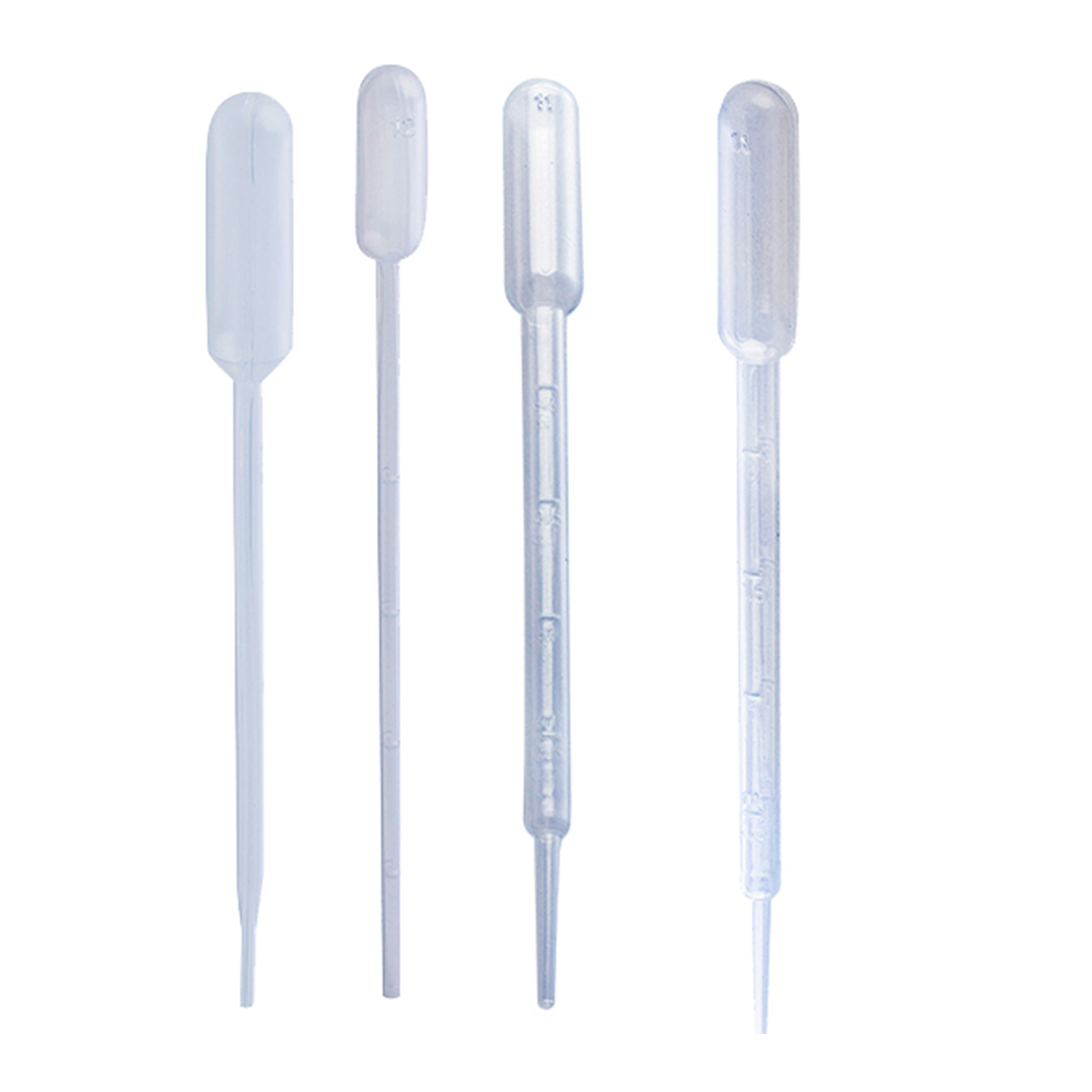
Pasteur Pipette
Login to view prices

Related products

Frequently Asked Questions
What is a Pasteur pipette?
A Pasteur pipette, also known as a dropper or plastic transfer pipette, is a laboratory tool used for transferring small volumes of liquids. It is typically made of glass or plastic and has a thin, elongated shape with a tapered tip.
What are the different types of Pasteur pipettes?
There are two primary types of Pasteur pipettes: glass and plastic. Glass pipettes are more durable and can be autoclaved for sterilization, while plastic pipettes are disposable and often used for applications where contamination is a concern.
How do you use a Pasteur pipette?
To use a Pasteur pipette, you squeeze the bulb (or plastic part) to create a vacuum, immerse the tip in the liquid, and slowly release the bulb to draw in the liquid. Then, you can transfer the liquid by gently squeezing the bulb again.
What are the common applications of Pasteur pipettes?
Pasteur pipettes are used for a wide range of laboratory tasks, including transferring small volumes of reagents, mixing solutions, and collecting or dispensing biological samples, such as blood or cell cultures.
Can Pasteur pipettes be autoclaved for sterilization?
Glass Pasteur pipettes can be sterilized by autoclaving at high temperatures. However, plastic Pasteur pipettes are typically disposable and not suitable for autoclaving.

Kavita (verified owner) –
The product is firmly packed.