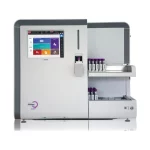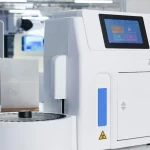

Introduction to Point of Care Testing Equipment (POCT)
Before delving into the latest trends, let’s briefly review what POCT entails. Point-of-care testing refers to diagnostic testing that takes place at or near the location of the patient. This approach offers several advantages, including:
- Rapid Results: POCT provides near-instantaneous results, allowing healthcare providers to make timely decisions about patient care.
- Reduced Turnaround Time: Unlike traditional laboratory testing, which can take hours or even days, POCT delivers results within minutes.
Improved Patient Care: POCT enables real-time monitoring and adjustment of treatment plans, enhancing patient care outcomes.
Current Trends in Point-of-Care Testing Devices
Miniaturization and Portability
The miniaturization and increased mobility of Point-of-Care Testing (POCT) equipment have been made possible by technological advancements. By enabling on-site testing, these portable devices eliminate the need to transfer samples to centralized laboratories. Faster diagnostic and treatment choices are made as a consequence of the ability of medical personnel to conduct tests swiftly and effectively at the patient’s bedside, in ERs, ambulances, or at other remote places.

Advanced Technology Integration
Modern technologies like the Internet of Things (IoT), artificial intelligence (AI), and machine learning are increasingly being used by POCT devices to improve their efficacy and accuracy. Real-time data transfer and analysis are made possible by IoT-enabled devices’ seamless connections. To analyze test data and provide precise diagnoses, AI and machine learning algorithms are helpful. These developments improve POCT devices’ accuracy and efficacy, which enhances patient care.
Improved connectivity and data management capabilities
The improved connectivity options that POCT devices currently offer allow for a smooth interaction with electronic health record (EHR) systems. This connectivity enables the device and healthcare practitioner to share data in real-time, improving monitoring, tracking, and follow-up care. In-depth reports and analytics are produced with the help of data management tools, which contribute to the use of evidence in decision-making.

Use of single-use, disposable devices
The usage of single-use and disposable POCT devices is spreading quickly. These tools do away with the need for time-consuming and expensive sterilization procedures, reducing the possibility of cross-contamination and advancing infection control efforts. In addition to increasing ease and workflow effectiveness, disposable devices are perfect for point-of-care and quick testing.
Emerging Trends in Point-of-Care Testing Devices
Biosensor and bioanalytical technology advancements
For the future of POCT devices, the development of innovative biosensors and bioanalytical methods holds enormous potential. These developments make it possible to identify analytes in a very sensitive and specific manner, improving test findings’ accuracy and dependability. Rapid and point-of-care diagnostics have a lot of promise when using biosensors based on electrochemical, optical, and nanomaterial-based technologies.
Development of Point-of-Care Testing Equipment Based on Smartphones
In the healthcare sector, smartphone-based POCT devices are quickly becoming a disruptive technology. These gadgets turn smartphones into effective diagnostic instruments by making use of the features already present in smartphones, such as their integrated cameras, CPUs, and networking. The ease of use, cost, and accessibility of smartphone based POCT devices make them perfect for remote patient monitoring in settings with limited resources.
POCT Devices and Electronic Health Records (EHR) Integration
The smooth data interchange made possible by the integration of POCT devices with EHR systems improves care continuity. The POCT device’s real-time transfer of test findings to the patient’s EHR enables medical practitioners to access full patient data, make knowledgeable decisions, and deliver individualized treatment. This connection improves patient outcomes, simplifies workflow, and lowers mistake rates.
Use of POCT Devices for Remote Monitoring and Personalized Medicine

Benefits and Implications of Current and Emerging Trends
Improved Patient Care and Treatment Results

Better Healthcare Delivery Efficiency and Cost-Effectiveness
By eliminating the need for sample transportation and reducing turnaround times, POCT devices speed up diagnostic operations. This effectiveness promotes quicker decision-making, shorter wait times for patients, and optimal resource use. Additionally, by enabling point-of-care testing, these devices lessen the workload on centralized laboratories and related expenses, improving the cost-effectiveness of healthcare delivery.
Better Healthcare Delivery Efficiency and Cost-Effectiveness

Applications of Point-of-Care Testing Outside of Conventional Settings
The uses of POCT devices are being expanded outside of typical healthcare settings thanks to current and developing trends. These gadgets are useful in disaster response situations, distant or sparsely resourced places, ambulatory care, at-home healthcare, and even non-medical applications like veterinary and sports medicine. The adaptability of POCT devices increases healthcare accessibility while assuring prompt and accurate diagnosis for a range of groups.Real-time data empowerment for healthcare professionals and patients
By supplying real-time data, POCT devices empower medical staff and patients. Quick, well-informed judgements may be made by healthcare providers, improving patient care. In addition to supporting telemedicine activities, real-time data access enables remote consultations and recommendations based on as-of-right test findings.

Conclusion
The future of point-of-care testing equipment is promising, with technology continually pushing the boundaries of what’s possible. From AI-powered diagnostics to portable devices, multiplexing technologies, and improved connectivity, these emerging trends are reshaping the way healthcare is delivered. As we move forward, we expect POCT to play an even more prominent role in improving patient care, particularly in underserved areas and during emergencies.
At Kwipdeals, we remain at the forefront of these emerging trends, providing access to cutting-edge point-of-care testing equipment. Stay updated with us for more insights into the latest developments in medical diagnostics.
~ Warm regards,
Dr. Dipti Charisma Ekka, MBBS, MD, MHA