
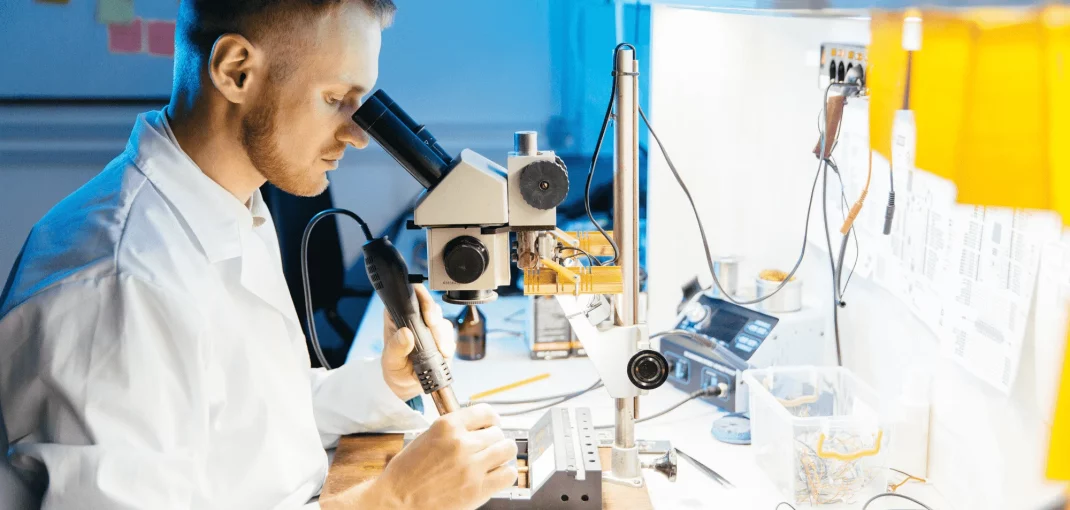
The landscape of laboratory science is evolving, and at its heart is the integration of the medical laboratories and IOT. IoT, with its ability to connect devices, collect data, and provide actionable insights, is revolutionizing how laboratories function, conduct experiments, and contribute to scientific progress. In this in-depth exploration, we will delve into the multifaceted impact of IoT on lab equipment, from optimizing efficiency to enhancing safety and fostering innovative scientific endeavors.
Technological progress and scientific progress have always been inseparable. We live in an age of continual scientific discovery, which stems from both the efficiency of contemporary scientists and the ambition to expand our understanding of the natural world. Every day, scientists go one step closer to effectively bioprinting complex organs, using gene editing to cure illnesses, and perfecting predictive medicine. These advances, taken together, have the potential to profoundly impact many parts of our lives. The existing research environment, however, does not maximize researcher potential.
This has an adverse effect on research leading to slower rate of discovery. The answer is to integrate the Internet of Things (IoT) into the laboratory setting to increase the effectiveness of how research and development is carried out and get us closer to realizing the smart lab.
Key Components of Medical Laboratories and IOT
To understand the role of IoT in lab equipment, it’s crucial to grasp its key components:
1. Sensors and Data Collectors
IoT relies on sensors that capture data from the physical world. In labs, these sensors can measure variables such as temperature, pH levels, gas concentrations, and more.
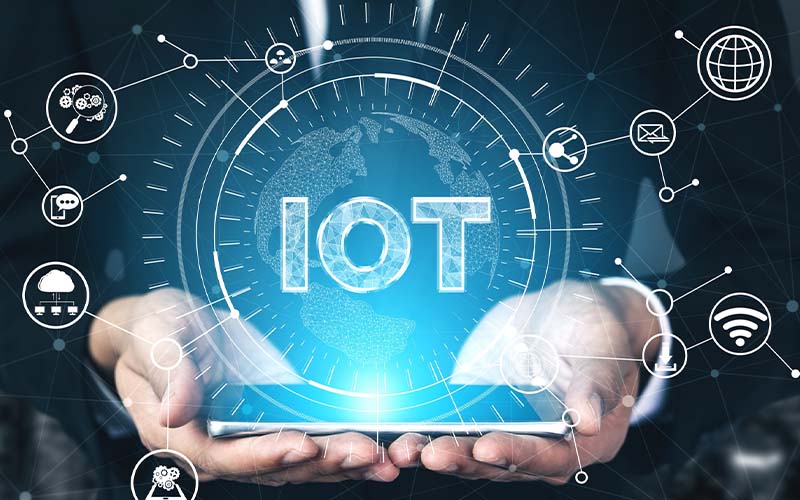
2. Connectivity
IoT devices are connected to the internet or an intranet, allowing them to send and receive data. This connectivity can be wired or wireless, depending on the lab’s infrastructure.
3. Data Analytics
The data collected by IoT sensors is processed and analyzed using advanced algorithms and machine learning. This step transforms raw data into actionable insights.
4. Control Interfaces
IoT-enabled lab equipment often comes with user-friendly interfaces that enable remote monitoring and control. Researchers can adjust settings or receive alerts from their mobile devices.
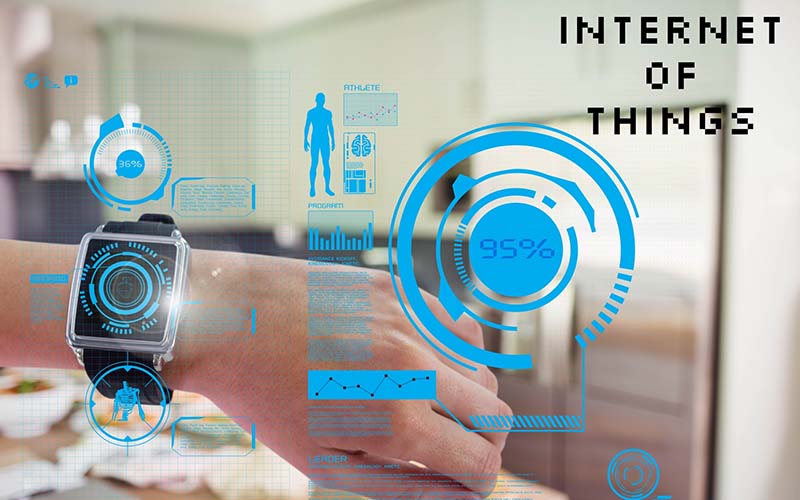
IoT Lab Solutions Available Today
We start to notice a number of options when the distance between potential and profit decreases. These are enterprise-level solutions, as opposed to numerous consumer-focused ones like smart home goods. This technology functions similarly to Microsoft Power BI for commercial and industrial applications.
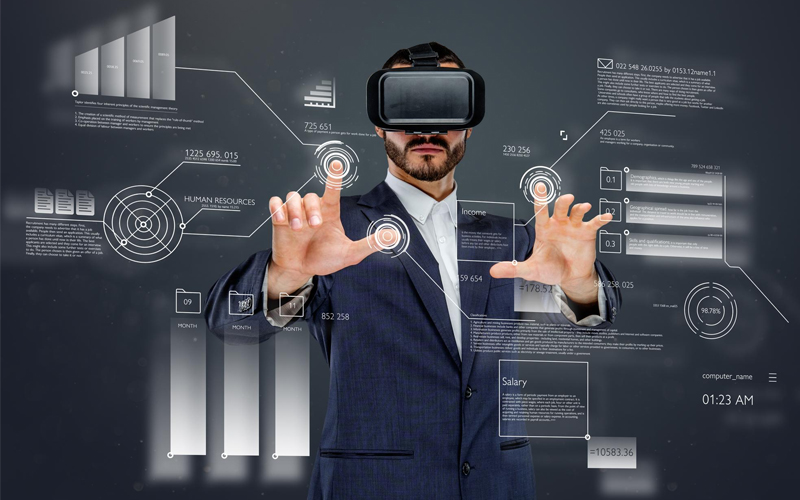
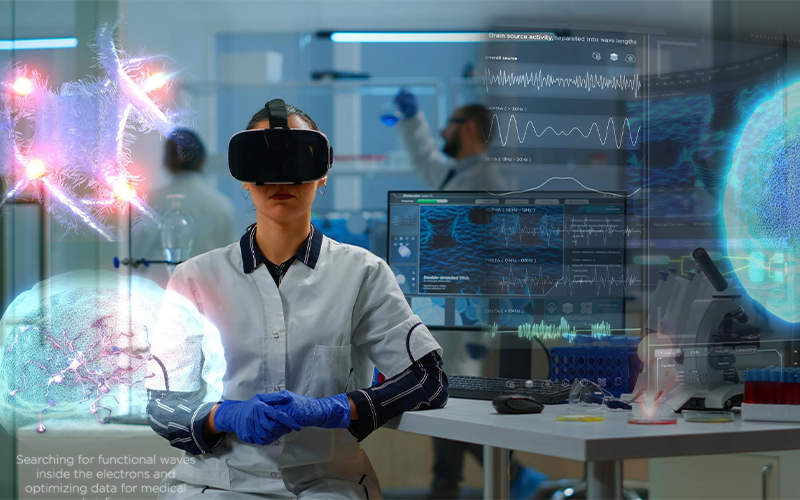
A set of Mixed-Reality smart glasses called Holo4Labs is designed specifically for use in lab environments. These are especially well suited for integrating with LIMS, or Laboratory Information Management Software. This has a variety of applications. Smart glasses that can recognize the user’s speech and hand motions can provide the wearer with a step-by-step tutorial. By connecting to a common database and obtaining the necessary information from there, it may also provide a warning about dangerous items. We may classify this device as IoT-ready based on this solution and more.
The handling of samples is an essential task. Voice instructions enable laboratory equipment to assist or even take sample measurements on its own. Then, a sample registration would automatically follow the most recent requirements. All of this is made possible through online connectivity.
In the end, the IoT would serve as a compass, connecting data and AI to improve procedures. Workflow, infrastructure, output, and forecasts are all included.
Enhancing Research and Experimentation
IoT-equipped lab equipment is not just about convenience; it’s about advancing the quality and impact of research and experimentation. Here’s how IoT contributes:
Real-Time Data for Informed Decisions
In scientific research, timing is critical. IoT provides researchers with access to real-time data, enabling them to make timely decisions and adjustments during experiments.

Accelerated Discovery
The ability to process and analyze vast amounts of data quickly accelerates the pace of discovery. Researchers can uncover patterns and correlations that may have been missed without IoT.
Efficiency and Resource Optimization
IoT-driven efficiency extends beyond equipment. Labs can optimize resource usage, reduce energy consumption, and minimize waste, contributing to sustainability efforts.

Sample Tracking
Barcode technology has been widely adopted in hospitals as a key tracking tool due to its affordability and dependability. Two-dimensional (2D) barcodes were subsequently adopted by the pharmaceutical drug discovery business due to the success of barcodes in the medical sector.
The use of 2D barcodes in these procedures adds an extra layer of security to guarantee the reliability of samples and enables managers to keep an eye on samples as they go through protracted workflows.
Despite the use of barcodes in the laboratory context, many automated systems lack barcode readers that may enable the tracking of samples. Because of the need to connect more networked computers and barcode readers, laboratories that must track samples handled by these systems must also remove otherwise available bench space. This naturally raises the cost of these operations.
Recently, scientists discovered that a central Internet of Things device may solve these problems.
A headless IoT computer, barcode reader, and multicolored light-emitting diode (LED) strip were all components of this IoT system.
The “Smart Lab” Concept
You’ve undoubtedly heard about smart cities and houses by now. The smart lab includes linking equipment and machinery in the lab to the internet, which is similar to these ideas.
With the additional link, a researcher will be able to externally control all lab equipment, enabling them to carry out an experiment more quickly and precisely.
The smart lab system also makes it simpler to document data, and it incorporates AI and machine learning to simplify experimentation. This creates a genuinely intelligent, productive environment where machines can anticipate experiment outcomes and build experiment hypotheses by connecting every tool in the lab not just to the researcher but also to each other.
Researchers will have more time to focus on important benchwork since there will be less human interference in the fundamental laboratory procedures. The techniques of experiments will be made easier by this capability, and since the data will be digitized and saved on the cloud, it will ensure that no scientific study is lost; taken together, these advantages are anticipated to sustain waves of future scientific growth.
IoT and Laboratory Safety
Safety is paramount in laboratory environments, and IoT plays a crucial role in enhancing safety protocols and practices.
Monitoring Hazardous Materials
Labs dealing with hazardous materials can use IoT sensors to monitor environmental conditions and detect leaks or deviations from safety parameters.

Access Control and Security
IoT can enhance access control systems, ensuring that only authorized personnel can enter certain areas or access specific equipment.

Safety Compliance
Compliance with safety regulations and standards is easier with IoT. Data logs and automated safety checks help labs maintain a high level of safety and compliance.

Important Considerations
The installation of these devices and other related gear can be pricey, despite the fact that integrating IoT into the laboratory environment has a number of significant benefits. However, it should be emphasized that the expenses involved with this type of sample preservation might be far more than the loss of samples as a result of a freezer or incubator malfunction.
Before integrating IoT in a lab, there are several security issues that need be resolved in addition to the additional expenditures. For instance, hackers may get access to these systems and modify freezer and incubator settings to harm hardware or samples. Errors in the design or programming of devices might lead to additional privacy and security problems.
It is advised that research organizations encrypt all data, using a unique encryption key for each device, to prevent sensitive data from being compromised. IoT lab security may also be increased by the creation of unique rules that define acceptable and unacceptable data practices and by legislation requiring extra security measures for sensitive data, such as biometric identification.
What Does the Future Hold?
The ideal setting for IoT adoption is the laboratory environment because of its unique characteristics. With an emphasis on accuracy, efficiency, and compliance, the productivity boost provided by IoT-enabled devices might significantly enhance discovery yield.
Researchers are increasingly looking for ways to accomplish this without investing in new laboratory equipment and machinery because science is governed by a strict set of measures and regulations to ensure that research is findable, accessible, interoperable, and compliant, such as FAIR (ensuring research is findable, accessible, interoperable, and replicable).
Notably, there are additional digital solutions that enable a common platform for research data storage and recording, such as the laboratory inventory management system or the electronic lab notebook. A clear answer for scientists, smart laboratories will integrate software, equipment, and laboratory teams. IoT will influence how research and development are carried out for years to come in these ways.
Conclusion
In conclusion, the marriage of IoT and laboratory equipment is not just a technological advancement; it’s a paradigm shift in scientific research. IoT empowers laboratories to operate more efficiently, make data-driven decisions in real time, and conduct experiments with greater precision. It enhances safety, accelerates discoveries, and contributes to the sustainability of research facilities. As we look to the future, the possibilities for IoT in labs are limitless, and collaborations between equipment manufacturers, software developers, and research institutions will continue to drive innovation.
The message is clear about laboratories that embrace IoT are poised to lead the way in scientific breakthroughs and contribute to a healthier, smarter world.
~ Warm regards,
Dr. Dipti Charisma Ekka, MBBS, MD, MHA